

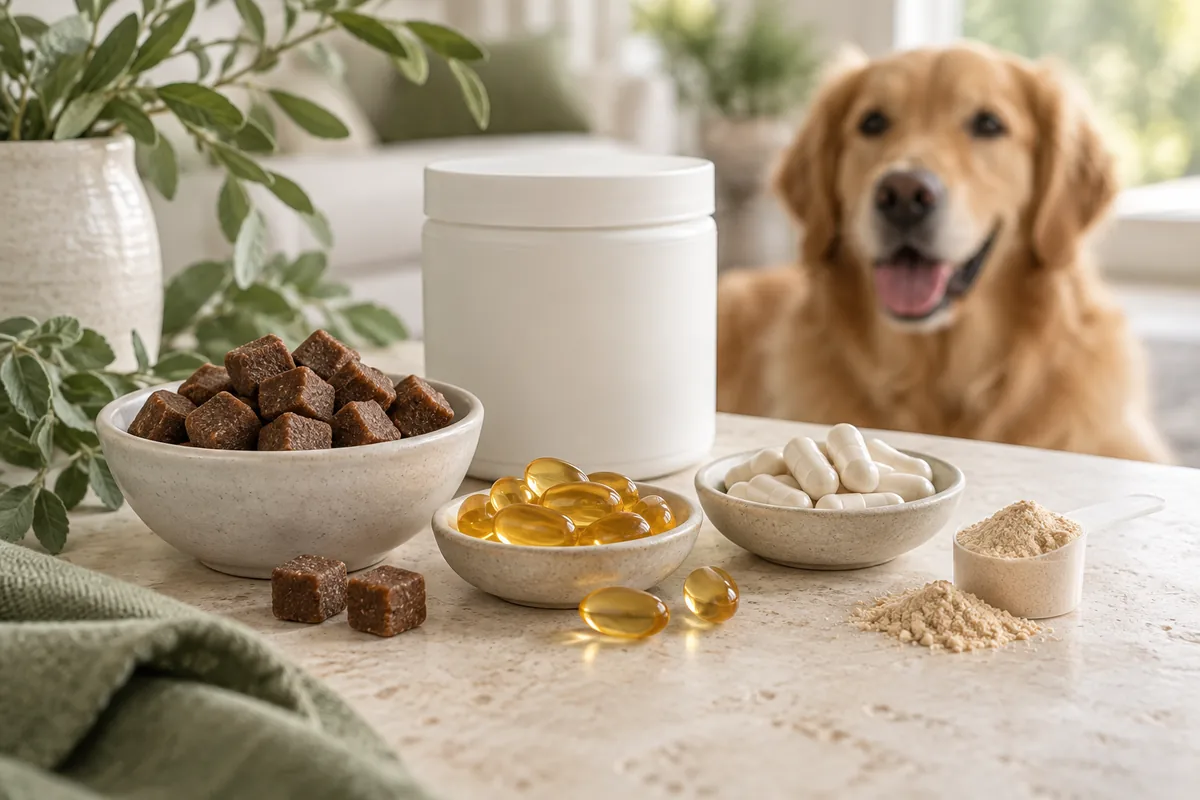
There is no single best pet supplement format. Compare the intended formula, serving routine, packaging and target market together. A convenient format is only useful if the finished product meets its agreed specifications.
Start with the product brief, not the shape
For a brand developing pet supplements, format selection is a product-development decision. Before choosing a chew, powder, liquid or capsule, define who the product is for and how the owner is expected to use it.
Write down the target species and life stage, proposed ingredients, intended market and packaging concept. Ask a qualified formulation professional to establish appropriate ingredient amounts and directions. Do not transfer a human supplement formula or serving instruction directly to a pet product.
This guide focuses on procurement and development questions. It does not recommend a supplement or a dose for an individual animal.
Compare pet supplement formats
Use the following comparison as a starting point for a supplier discussion, not as proof that a format improves absorption or delivers a particular health outcome.
| Format | Questions to resolve | What to inspect in a sample |
|---|---|---|
| Soft chews | What piece size and texture suit the intended use? Can the proposed formula fit the serving plan? | Piece consistency, texture, handling, packaging closure and an appropriate acceptance evaluation. |
| Powders | Will the product be measured with a scoop or supplied in individual portions? How will directions explain the serving? | Flow, clumping, mixing instructions and how the measuring accessory is specified. |
| Liquids | Which bottle and dispensing system fit the formula? Are shaking or specific storage instructions needed? | Leakage, closure fit, dispensing consistency and the proposed stability-testing plan. |
| Capsules | What fill and shell are proposed? How will the finished product be administered? | Unit size, shell condition, fill specification and packaging protection. |
Request a reasoned recommendation for your formula rather than assuming the most familiar format is the best fit. You can explore our product formats before preparing a development brief.
Choose the packaging alongside the formula
A jar, pouch, bottle or individual pack changes how a customer measures, stores and handles a product. Compare the closure, dispensing accessory, label space and opening routine as part of the same discussion.
Ask the supplier to explain how the proposed pack will be evaluated with the actual formula. Do not assume that a different container can use the same shelf-life claim without supporting work. Include transport conditions and the intended market in the packaging brief.
For a custom project, discuss formulation and packaging development together rather than approving the artwork before the product specification is settled.
What to request before approving samples
Agree on written acceptance criteria. Appearance alone cannot establish ingredient content, stability or microbiological quality. Ask which tests apply, how results are reported and whether the documents correspond to the sample or production batch you are reviewing.
- A proposed finished-product specification and ingredient declaration.
- Clear serving and storage instructions for professional review.
- A packaging specification, including any measuring accessory.
- A testing plan with methods, acceptance limits and batch traceability.
- A written record of changes between the approved sample and production.
For the US market, do not assume the human dietary-supplement framework applies to animal products. FDA states that DSHEA does not apply to animal food. Review the intended ingredients, claims and labeling with a qualified specialist for the destination market. See FDA’s animal food overview and pet food guidance.
A practical development brief
Copy this checklist into your next supplier conversation. If an item is undecided, mark it as a question rather than filling it with an assumption.
01 — Target species, life stage and intended market
02 — Product concept and proposed ingredients
03 — Preferred format and serving routine
04 — Pack size, closure and label requirements
05 — Initial order estimate and launch priorities
06 — Required documentation and sample acceptance criteria
Ask what affects the minimum order, development schedule and quotation. An existing formula and a new formulation may require different work; agree on the actual scope before comparing prices.
Common questions
Are soft chews always better than capsules?
No universal preference can be established from the format alone. Compare the specific formula, intended animal, serving instructions and sample evaluation. Do not infer efficacy or absorption from appearance.
Can I keep the same formula when changing format?
Treat a format change as a development question. Ask the formulation team to reassess the specification, process, packaging and validation needs rather than assuming a direct transfer.
Should I choose private label or custom development?
Start by checking whether an existing product meets your brief. If your requirements differ, identify the changes and ask what development and verification they need. See our private label overview.
References & editorial scope
Prepared by boncinpet as a general guide for brand owners. The comparison and checklist are editorial procurement tools, not clinical claims, regulatory approval or evidence of a specific manufacturing certification.
Sources checked October 6, 2026. Destination-market requirements should be reviewed for the actual product.
PUT YOUR BRIEF INTO PRACTICE
Have a pet supplement project in mind?
Share your target market, preferred format and packaging requirements.
Discuss your project